Tuesday, January 27, 2015

Traditional Math Games - Connect 4

I was playing Connect 4 the other day with my niece. Our age didn't matter – we both had equal parts of fun and equal parts of brain busting. It is such a simple game, it’s sometimes mind blowing to know just how much critical thinking you can teach or learn from a few pieces of colored coin. It is also a great way to teach counting and math to preschool math learners.


Image Source - http://uncannyflats.com/wp-content/uploads/2013/12/connect-4.jpg

If you haven’t played the game, the premise of Connect 4 is seemingly simple, with players taking it in turns to drop colored coin like pieces into a vertical grid of 7 columns and 6 rows. The winner is the first player to 'Connect 4' pieces either vertically, diagonally or horizontally. This game is a great leveler for adults to play with children, because the simplicity of the play masks the fact that there are actually 4,531,985,219,092 positions and the fact that the game is one in which very real strategies can be developed. There are many different versions of Connect 4 under guises such as Pop out, Pop 10 and 5 in a row, but the original remains the simplest and the best.12:15

I would recommend you buy a game for the classroom or home for those moments when you need a break but don’t mind having a bit of intellectual activity mixed in.


Tuesday, January 13, 2015

The Sum of Life – Why Addition Matters

Math has a reputation for being a toughie for various reasons. When it is taught in classrooms with endless drills, it can be viewed more as a struggle than something useful or even something fascinating. When a sense of struggle and restlessness sneaks into learning, kids tend to become resistant to what is being taught.

A great way to ease kids into learning math and especially basic operations like addition, subtraction, multiplication and division is to establish how useful they are in everyday life. In other words, establishing the context can help kids understand the concept better as opposed to learning the concepts in isolation.

One way of doing this is through online addition games. Why addition games? Simply because games provide context. You can also consider how we use addition in everyday life and to engage kids in activities where they can use this operation. You could say, subtraction is the other side of the coin and hence, any activity that uses addition can also be used to teach subtraction as well.

Addition” by Kathy Cassidy is licensed under CC BY 2.0

Introducing Addition
Start from the very beginning and introduce addition to kids, the bare facts and nothing but the facts. 
  • Addition is an operation that combines two or more values.
  • The symbol used is ‘+’, called ‘plus’, and indicates the values before and after the symbol must be combined.
  • The values are known as addends.
  • Addition can be carried out in a horizontal layout or vertical/stacked layout.

Addition in Everyday Life
Once kids are introduced to the concept, take them through all the ways addition is used in their daily life. Ease kids into it by demonstrating with objects, word problems and then get them to use addition in real life situations. Some simple ways to do it include:

  • Shopping – Take kids out for a round of shopping. Ask them to help you add up the total on your bill. In case of younger children, ask them to hand you a box of cereal and then bring two more. You can ask them how many boxes of cereals are there altogether.  
L'addition” by francois schnell is licensed under CC BY 2.0

  • Cooking – Kids can pick up math in the kitchen. Add a spoon of sugar, and then ask your child to add four more, and to write down the total amount of sugar used. The kitchen is also a good place to teach kids about measurements.
  • Sports – While watching a game, kids can keep a count of the scores and add them up to see if the sum of scores matches the score shown at the end of their game. 


Soccer math game” by Shabayek is licensed under CC BY 2.0

  • Age – Explain to children how they grow older by a year, that is, a year is added to their existing age. They can try working out their age and other people’s age. Caution: Not to be exercised around age-sensitive folks!
  • Time – You could tell them that they can leave the house after ten minutes. Kids will need to use addition to know at what time they can go out to play. 


If you look around you, you will see that addition along with other basic math operations is used in many ways.  By allowing children to make these connections in real life, math will stop being the bitter pill one has to swallow to score grades and will become something more substantial that can be understood and, more importantly, enjoyed. 

Tuesday, December 9, 2014

How to Train a Mathemagician


You can get your kids to unleash their hidden math genius by making learning math an interactive and fun activity. This will help them trade in the ho-hum of math drills for something more exciting which sharpen their skills. Math can only be learnt through a lot of practice, so making practice fun can take away a lot of stress from learning.

Hunt for Game
Hold the fire! We are talking about game-based learning here. Kids can practice basic arithmetic operations through educational games. As you might well know, games are addictive and this means they get loads of practice. In the Penguins of Madagascar games, kids can help out the penguins in their quests by solving math problems like addition and subtraction. You will need to find the right game for your kids based on their age and curriculum to make sure they are on the right track.

CIMG0693” by Lambda Chi Alpha Fraternity is licensed under CC BY 2.0

Be the Count of Counting
Counting is the entry way to mathematics for young learners and there is no such thing as too much practice. So you will need to find new ways to make kids practice their numbers. Pom poms are a great way to teach counting as they are seen as toys and you can create various games with them. One of them is where you can number jars and ask kids to drop in a corresponding number of pom poms into each jar.  


Develop a Sweet Tooth for Shapes
Here’s a sweet way to teach kids geometric shapes. Marshmallows and toothpicks can be used to demonstrate various geometric shapes, edges, vertices and faces of solids. Don’t forget to put away a few as a prize for acing the shapes. You can also get kids to construct different shapes using marshmallows and toothpicks.

Geodesic... Marshmallows?” by Derek Bruff is licensed under CC BY 2.0

Overcome the Math Block
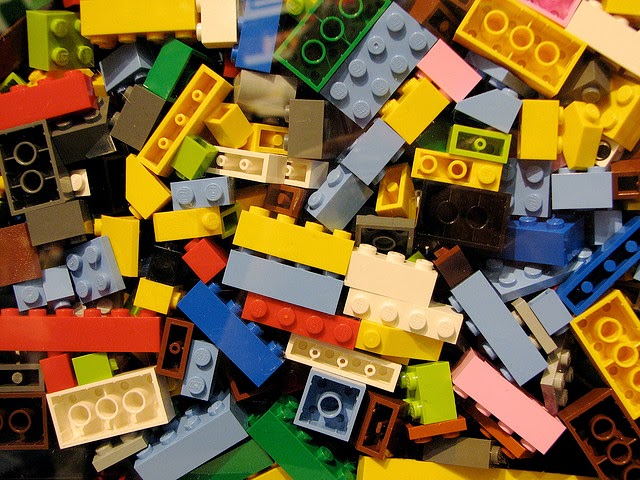
If your kid does not like learning the multiplication table, try using LEGO blocks to teach them this operation. To find out what is two times six, they have to make two groups of six and they have the answer! You can also use blocks to teach grouping and patterns.

Lego Bricks” by Benjamin Esham is licensed under CC BY 2.0


Once kids are thorough with the basics of math – which is why we need loads of practice here – they will be more than ready to take on more advanced problems. 

Tuesday, November 18, 2014

3 Indoor Fun Math Games for Kids

It is easy to whip up games for your kids to play when they are indoors. It is even better if you can integrate some learning into it. There are many apps out in the market that do just that. You can also check out the fun math games that are available online. These games apart, you can put together many other games at a moment’s notice for kids of various ages.

It is Time to Count
You can get young kids busy with this simple game of counting and sorting. You need ten see-through jars with lids. Cut out numbers from 1 to 10 on construction paper and tape them on the lids of the jars. You will need around 60 pom poms. You can also use big buttons or make cotton balls. Pile them up and ask your kid to add the relevant number of pom poms into the jars. That is, one pom pom goes in to the jar labeled as one, two pom poms in the jar labeled two, and so on. You can set up a timer and ask them to finish before the time is up.


math games” by Jimmie is licensed under CC BY 2.0

DIY Board Game
You will need card stock for this game. Any large sheet of paper will also do. Draw square grids. Mark the first square as ‘Start’ and the last as ‘Finish’. Fill the first box and the second box with numbers, and the third box with a math operation like addition, subtraction or multiplication. Write out the answers to the math challenges on an index card. For example, box one has 3, box two has 4, box 3 has the first challenge, which is to multiply the last two numbers. The index card for the first challenge should show 3 x 4 = 12. Once kids pass this challenge they can move their game piece (this can be a small toy) to the next few squares for the next challenge until they reach the finish.


IMG_0001” by woodleywonderworks is licensed under CC BY 2.0

Bring on the Cards
This is one of the easiest and most enjoyable ways to teach numbers to kids. You can get them to learn how to compare numbers with the War card game. Divide a pack of regular playing cards in two sets, which have to be kept face down. Now taking turns, kids have to place a card face up until there is a tie. To break the tie, each kid has to place three cards out front, face down, and the fourth card face up. The one with the highest card gets to collect all the eight cards. The winner of the game will be the one who collects all the cards.
Another fun math game with cards is where each player draws out the top three cards from their sets. They need to use different math operations to come up with the highest number. The player with the highest number wins the round and takes all the six cards that are laid out. Again, in this game, the player who takes all the cards wins.


These are but a few simple games that can be played indoors. They will keep kids busy and will help drive home a few math concepts! 

Sunday, November 9, 2014

Fraction Bingo

As a homeschooler and a mum, I’m very aware of my children’s aging process. The awareness of them growing older is a constant background feeling. It comes with the parenting job description. It isn’t something that defines the way you behave with them but it does inform certain actions.

This subtle dread became full blown panic the other day when I realized that my child was old enough to be taught fractions! Fractions! It strikes more fear in me than spiders. I hated Math as a child and always go with the easiest option of rounding things off. As my child’s primary teacher, I can’t brush it off in the same careless manner. I am well aware than if I hate math, my child will too.

Determined to teach myself to love math, I went on a googling spree to figure out unique ways to learn fractions. I wanted to, first, understand the concept thoroughly and second, discover a way to transfer that knowledge in an interactive and fun way so that the subject isn’t a huge rainy cloud over the poor dear’s head.

And then I found a way and the little ones have been wanting to play it every day. When their friends are over, it is one of the games that come out of the cupboard. I can’t really complain, if they can learn from the games they are playing, why not?

The idea and concept is taken from – Primarily Speaking: A blog for teachers. Click through for instructionals.


The secret ingredient to learning fractions without losing your mind = Fraction Bingo. I created a few sheets of fraction figures. When I call out a fraction, the kids have to find it on their bingo sheet and color in the fraction. The rest of the Bingo rules apply.

Don't you just love the internet and its goodies?


Wednesday, October 8, 2014

Mathematical!

Adventure Time is a big enough phenomenon for you to have heard of it. If you’re still seeing stars, this might jog your memory.
Image Source

Jake the dog and Finn the human are the reason my kids love Math. Earlier it was moan this, tantrum that when we took out our Math syllabus. It got so loud when the worksheets came out that it completely threw my teaching style. I learnt a lesson then –Flustered Parent = Even More Flustered Child. I think trying to navigate the dark recesses of Math is difficult enough without both of you being in a bad mood.

Luckily, I didn’t have to go looking for solutions. Adventure Time found them. It’s a story of a boy and his dog and they go on adventures completely unrelated to Math. Some of the content is for older kids – I think Jake and Finn are meant for preteen ages and above. So how did the kids take Math away from a show like that?

Simple, it is Finn’s favorite catch phrase. When the monster has been defeated, when an adventure has been successful, when the day has been saved – the adventure duo, Finn and Jake, use Math terms. The kids most favorite one, of course, is MATHEMATICAL!

When the kids suddenly showed an interest in a subject for no logical reason, I didn’t complain. This mom did a little happy dance. And said the words!


Image Source


Tuesday, August 26, 2014

Summer Holiday Fun for 10-year olds - Outdoor 1st Grade Math Games


How can summer holidays be made more fun with a little bit of educational games and a lot of playtime in the backyard? Involve your 10-year olds in these fun, outdoor 1st grade math games and have a blast with addition, skip counting, back counting, and number word reading.


The Game of Mother Lion and Her Cub


Photo Courtesy: Amanda Westmont


In first grade, your child should be familiar with skip counting, back counting, and number line. However, when the kids are back to school after their holiday, teachers would expect them to not only skip and back count but ‘read’ number words too. Here are some exciting backyard 1st grade math games that you can play with the kids on a sunny day!


Mother Lion

Cut 10 6x6” squares from a construction paper. You can choose to have 10 different colors of construction paper to make the math game as colorful as possible! Write a digit each on one side of the squares and their corresponding number words on the other side. 

Have the kids stand in a row while you stand a few feet away from them with the squares. Make sure the distance is such that the kids are neither too close to you nor too far to see the number cards that you’ll hold up.

You will be the mother lion while the kids will play the part of hungry cubs. They’ll begin the game by asking you “Mother lion, mother lion, what time is it?” and you’ll display the word number side of any number card indicating the time. If you display ‘four’, the kids will have to take four steps toward you. Once they take the steps, you will pretend to fall asleep, ignoring the hungry little cubs. They will again wake you up with the same beginning line and this time you will flash the number side of a random number card. If you flash ‘6’, the kids will have to go back 6 steps. Alternate between the number and word sides of the cards and finish the game when a child reaches your spot. 

Math skills learnt – Skip counting, counting backwards, and number word recognition.


Bowling with a Twist

Photo Courtesy: Tinou Bao


The classic game of bowling is twisted and tweaked to make it a great outdoor event as well as an exciting 1st grade math game at home! Gather 10 empty soda bottles and fill them up with sand to make the game more challenging. Cut out strips of construction paper and write the numbers 1-10 and paste each label on a random bottle.

Arrange the bottles on your driveway in a triangle. Right after the triangle, draw a line with a chalk and mark that as the end of the alley. Make sure the bottle with the number 10 is right in the front so that it is the most difficult to send off the alley. Divide the kids into two groups and toss a coin to choose the group who’ll take the first throw. Get a deuce ball to start the game. Just like a normal game of bowling, have the kids throw the ball at the bottles and send off the ‘pins’ off the alley. Have the player who throws the ball count up the numbers on each pin that gets knocked and write down his score on the score maintenance sheet. Supervise so that there isn’t any error in calculating the total. 

Play a match of 2 rounds and declare the winner at the end of it. A great game of bowling and an exciting marathon of addition will keep the kids happy through the rest of the day!

Math skills learnt – Addition